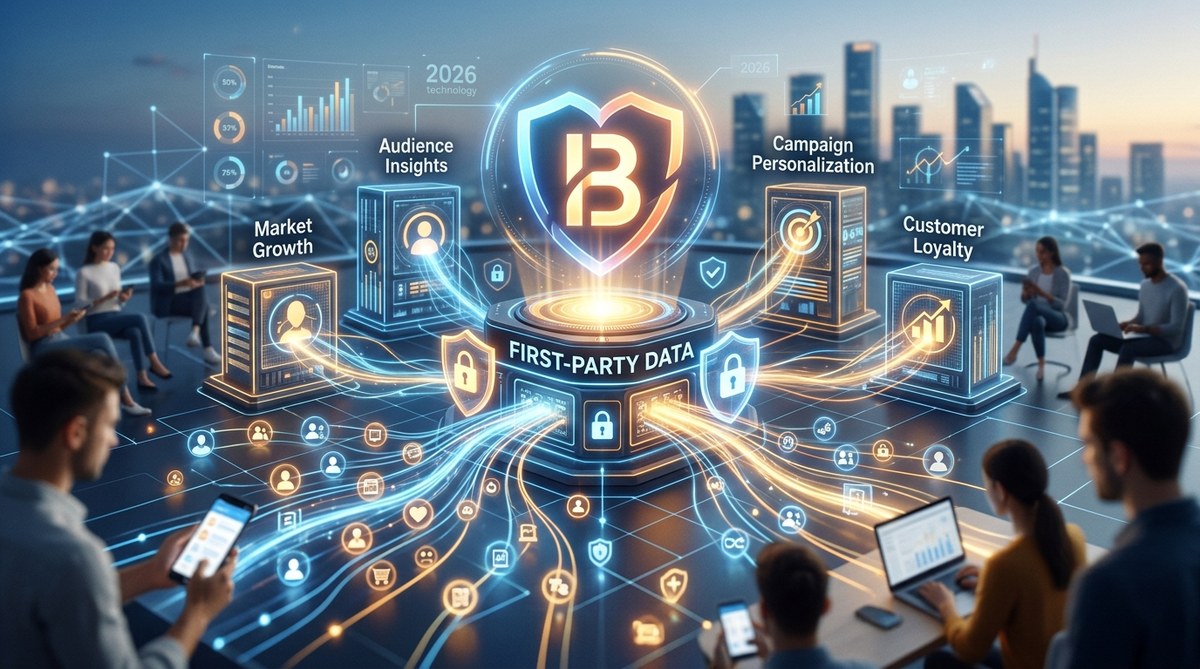
A first-party data strategy in 2026 is your brand's most durable competitive moat. With third-party cookies gone and privacy rules tightening, the brands that win will be those that collect, unify, and activate their own customer data ethically. This guide walks you through the core principles, practical steps, and common pitfalls to turn first-party data into real growth.
Why Your Brand Strategy Needs a First-Party Data Revolution in 2026
The digital shelf is crowded. Every brand wants attention, but the old playbook is breaking. Third-party cookies are gone. Privacy rules are tightening. And customers now expect every interaction to feel personal, timely, and respectful of their data.
If you are a senior marketer, brand strategist, or CMO, you already know this. What you might not have is a clear first-party data strategy 2026 plan that turns your own customer information into a durable competitive advantage. That gap is where brands win or lose in the year ahead.
This guide walks you through why first-party data is now the centerpiece of modern brand strategy, how to activate it, and where most companies still trip up. You will leave with a practical roadmap you can use immediately.
First-party data strategy 2026 is about building direct, consent based relationships with customers. It turns every interaction into a learning signal. This guide covers the core shifts, practical steps, and common mistakes, plus how to activate insights for loyalty and growth.
Why First-Party Data Became the Centerpiece of Brand Strategy
The third-party cookie is dead. Not dying. Gone. Google finally pulled the plug, and brands that built their entire digital engine on borrowed audience data are now scrambling. The brands that saw this coming are already winning with a first-party data strategy 2026 that turns owned customer relationships into their biggest advantage.
This is not about collecting more data. It is about collecting the right data, with consent, and turning it into experiences that feel personal without feeling creepy. The brands that win in 2026 will be the ones that treat every email signup, every loyalty program entry, and every support interaction as a signal worth listening to.
For senior marketers, brand strategists, and CMOs, the shift is no longer optional. It is a survival move. Building a resilient brand strategy now depends on owning the relationship with your customer directly. When you control the data, you control the experience. And when you control the experience, you earn the loyalty that third-party cookies once tried to buy.
A first-party data strategy in 2026 is about owning customer relationships through direct, transparent data collection and activation. It replaces reliance on third-party cookies with richer, consent-based insights, enabling stronger personalization, loyalty, and ROI. This guide covers practical steps, common pitfalls, and future-proofing tactics.
The way brands collect, manage, and activate customer data has shifted in a major way. Third-party cookies are gone. Privacy regulations are tightening. Consumer expectations around data transparency are higher than ever. For senior marketers, brand strategists, and CMOs, this is not just a technical issue. It is a strategic opportunity.
A first-party data strategy in 2026 is not a nice to have. It is the foundation of sustainable brand growth. When you own the relationship with your customer data, you control your targeting, your personalization, and your measurement. You also build trust, which is the most valuable currency in a cookieless world.
This guide walks you through why your brand strategy needs a first-party data revolution in 2026, how to build one step by step, and where to focus your energy for measurable results.
Why First-Party Data Became the Center of Gravity
Third party cookies are dying. Privacy regulations are tightening. Platform changes are making audience data less reliable. In 2026, the brands that thrive will be the ones that own their customer relationships and the data those relationships create.
First-party data is the information your customers share with you directly. It comes from your website, app, email, customer service, loyalty programs, and purchase history. It is accurate, relevant, and collected with consent. That makes it the most valuable asset most brands have ignored for years.
The shift is not just about compliance. It is about building a stronger brand. When you use data that customers willingly share, every message feels more personal, every offer more relevant, and every interaction more human. That is the foundation of a resilient brand strategy in a landscape where trust is fragile.
A first-party data strategy in 2026 is about owning the customer relationship, not just collecting data. This guide explains why your brand strategy must shift from third party dependence to direct, consent based engagement. You will learn practical steps to build trust, personalize experiences, and turn proprietary data into a durable competitive advantage.
The death of the third party cookie has been announced more times than a farewell tour from a legacy rock band. Yet here we are in 2026, and the industry is still untangling what comes next. The real shift is not about a single piece of technology. It is about who owns the customer relationship, who gets to see the full journey, and who can turn raw signals into brand loyalty.
If you are leading brand strategy, you already know the old playbook is fading. Walled gardens, privacy regulation, and ad blockers have made third party data less reliable by the day. What replaces it is not another workaround. It is a first party data strategy 2026 built around direct relationships, transparent value exchange, and smarter use of the signals you already own.
This guide walks through what that strategy looks like, why it matters now, and how to build one that actually drives growth.
What Is a First-Party Data Strategy?
A first-party data strategy is your plan for collecting, organizing, and activating data that customers share with you directly. This includes purchase history, email engagement, app behavior, support conversations, loyalty program activity, and even preference center choices.
The key word is "direct." This data comes from your owned channels. It does not rely on third party cookies or external data brokers. That distinction matters more than ever as browsers and privacy regulations continue to phase out cross site tracking.
A strong first-party data strategy 2026 approach does three things well:
- It creates a single view of each customer across every touchpoint.
- It turns raw behavioral signals into meaningful segments.
- It activates those segments in real time to personalize experiences.
The brands winning in 2026 are not the ones collecting the most data. They are the ones collecting the right data, with explicit consent, and using it to build genuine relationships.
Why First Party Data Became the Only Sustainable Advantage
For years, brands relied on third party cookies to track people across the internet. That world is gone. Browsers have blocked tracking, privacy laws have tightened, and consumers expect more control over their personal information. The result is a marketing landscape where your own customer relationships matter more than ever.
First party data is the information you collect directly from your audience. It comes from your website, your app, your email list, your customer service conversations, and your loyalty program. Because you gather it yourself, you own it. You do not depend on a shrinking pool of third party signals.
This shift is not a temporary trend. It is the new foundation of brand growth. Brands that build a first party data strategy in 2026 will own their customer relationships. Those that wait will keep paying rising prices for audience access that keeps shrinking.
Why First Party Data Became the Center of Brand Strategy
The third party cookie has been dying for years. By 2026, the reality is clear: the old ways of tracking and targeting are gone. Browsers block them. Regulators restrict them. Consumers opt out of them. Your brand needs a different engine.
First party data is information you collect directly from your own audience. It comes from your website, your app, your email list, your customer service conversations, and your loyalty program. You own it. You control it. You can activate it without relying on a middleman.
This is why first-party data strategy 2026 has become the center of brand planning. It is not just about compliance. It is about building stronger relationships with people who already trust you. When you collect data with consent, you create a feedback loop that improves your product, your content, and your customer experience. That is a genuine competitive moat.
A first-party data strategy in 2026 is no longer optional. It is the engine behind personalization, loyalty, and sustainable growth. Brands that collect and activate owned customer data responsibly will build stronger relationships, improve return on ad spend, and stay resilient as third-party identifiers disappear. This guide shows you how to start.
What Changed in the Data Landscape
The digital shelf is not what it used to be. For years, brands leaned on third-party cookies to track people across the web, serve retargeted ads, and build lookalike audiences. Those days are closing fast. Browsers have blocked third party cookies. Regulators have tightened privacy laws. And consumers now expect brands to ask before they use their data.
The result? A first-party data strategy 2026 must be built on trust, transparency, and direct relationships. It is no longer enough to rent an audience. You need to own the relationship.
This shift is not a small technical adjustment. It changes how brands plan media, measure campaigns, and personalize experiences. The brands that adapt will gain a serious edge. The ones that delay will struggle to reach the right people at the right time.
Why First-Party Data Became the Centerpiece of Brand Strategy
For years, marketers leaned on third-party cookies to track users across the web. That era is ending. Browsers are blocking tracking scripts, privacy laws are tightening, and consumers expect more control over their data. The result? Your ability to reach people based on borrowed audiences is shrinking fast.
First-party data changes the game. It is the information you collect directly from your own audience: purchase history, site behavior, email engagement, app usage, and customer feedback. Because you own this data, you are not at the mercy of platform changes. You can build richer customer profiles, personalize experiences, and measure performance with far more accuracy.
This shift is not just a compliance exercise. It is a chance to build a first-party data strategy that gives you direct, meaningful relationships with the people who matter most. In 2026, brands that treat first-party data as a strategic asset, not a byproduct, will leave competitors behind.
A first-party data strategy in 2026 is about building trust, not just collecting information. You need explicit value exchange, transparent consent, and a unified customer profile. With third party cookies gone, the brands that win will be the ones that turn owned data into personalized experiences without feeling invasive. This guide gives you a practical playbook to do exactly that.
The cookie is crumbling. Third party tracking is on life support, and the digital advertising model that fueled the last decade is finally giving way. For brand strategists and marketing leaders, this is not a technical inconvenience. It is a strategic turning point.
The brands that thrive in 2026 will not be the ones with the biggest ad budgets. They will be the ones with the deepest understanding of their own customers. That understanding comes from one place: a serious first-party data strategy.
If you have been treating first-party data as an IT project, it is time to reframe it. This is a brand strategy conversation now. Your customers are telling you what they want through every interaction. The brands that listen, organize, and activate that signal will own the next decade of marketing.
This guide walks through why first-party data is the foundation of your 2026 brand strategy, how to build a durable data practice, and where to focus your energy for the strongest returns.
Why First-Party Data Became the Center of Gravity
Third-party cookies are gone. Not dying. Gone. The digital advertising ecosystem that many brands relied on for years has been dismantled, and the shift to a privacy-first web is no longer a rumor. In 2026, every brand must operate like a media owner, not just an advertiser. That means owning the relationship with your audience and collecting data directly from them.
First-party data is information your customers share with you through their actions, preferences, and interactions across your owned channels. Think website visits, purchase history, email engagement, customer service conversations, and app behavior. Because it comes straight from your audience, it is more accurate, more reliable, and more valuable than any third-party alternative.
The businesses that win in 2026 are the ones that treat every customer interaction as a signal. They build data ecosystems designed around trust, transparency, and value exchange. The ones that hesitate? They will keep paying rising costs for diminishing reach while competitors enjoy cheaper, more effective campaigns.
Why First-Party Data Became the Center of Gravity
For years, brands leaned on third-party cookies to track users across the web. That world is ending. Browsers are blocking tracking scripts. Privacy laws are tightening. And consumers expect more control over their personal information.
The result? A first-party data strategy is no longer a nice to have. It is the foundation of every serious brand plan for 2026. First-party data comes directly from your own channels: your website, app, email list, customer service interactions, and loyalty program. You collect it with permission. You control it. You can activate it without relying on a dying cookie.
That shift changes everything. It changes how you segment audiences, how you personalize creative, and how you measure return on ad spend. Brands that treat first-party data as a strategic asset will build stronger customer relationships. Those that wait will lose relevance.
This article walks through what a first-party data strategy 2026 actually looks like, why it matters now, and how to build one without burning your team out.
Why First-Party Data Became the Center of Gravity
For years, marketers leaned on third-party cookies to target ads, measure performance, and retarget shoppers. That world is gone. Browsers now block tracking by default, and regulations like GDPR and CCPA have reshaped how brands collect and use consumer information. The result is a digital ecosystem where owned data is the only reliable currency.
First-party data is the information you collect directly from your audience with their consent. It includes purchase history, email engagement, app behavior, loyalty program activity, and survey responses. Because it comes from your own channels, it is more accurate, more relevant, and more privacy compliant than third-party data.
A first-party data strategy in 2026 is not a nice to have. It is the engine that powers personalization, loyalty, and efficient media spend. The brands that master it will enjoy lower acquisition costs, stronger customer relationships, and a clear edge over competitors still waiting for the old rules to change.
This guide walks through why first-party data has become the new growth currency and how to build a practical strategy around it.
A first-party data strategy in 2026 is no longer optional. It is the engine behind personalization, customer loyalty, and efficient ad spend. This guide walks you through practical steps to collect, organize, and activate your own data, avoid common pitfalls, and turn customer relationships into a durable competitive edge.
A first-party data strategy in 2026 is no longer optional. With third-party cookies gone and privacy rules tightening, brands that collect and activate owned data will gain a real edge. This guide walks you through practical steps, common mistakes, and proven tactics to turn first-party data into lasting customer relationships.
# Why Your Brand Strategy Needs a First-Party Data Revolution in 2026
The internet changed. Your customers changed. And if your brand strategy still leans on third party cookies, you are already behind.
For years, brands relied on tracking pixels and borrowed audience data to deliver ads. That era is over. Browsers blocked the cookie. Regulators tightened the rules. And consumers now expect brands to respect their privacy while still delivering eerily relevant experiences.
The brands that win in 2026 will be the ones that own their customer relationships through first-party data. Not rented audiences. Not borrowed algorithms. Their own data, collected with consent, activated with care, and used to create experiences that feel personal without feeling invasive.
If you are a senior marketer, brand strategist, or CMO, this shift is not optional. It is the new foundation for sustainable brand growth. And the window to build that foundation is now.
A first-party data strategy in 2026 turns your owned channels into a growth engine. By collecting and activating customer data directly, you build deeper trust, improve personalization, and reduce reliance on third party cookies. The brands that act now will enjoy a significant advantage.
## What Is a First-Party Data Strategy and Why It Matters in 2026
The digital advertising world has changed. Third party cookies are fading. Privacy regulations are tightening. Consumer trust is fragile. Your old playbook for targeting and measurement is running out of steam. That is why a first-party data strategy 2026 is no longer a nice to have. It is the foundation of sustainable brand growth.
First party data is information your customers share with you directly. It comes from your website, app, email list, loyalty program, and even customer service interactions. Unlike third party data, it is collected with consent and owned by your brand. That makes it more accurate, more relevant, and far more respectful of consumer privacy.
But collecting data is not the same as activating it. A pile of email addresses and purchase histories means nothing without a clear plan. A smart first-party data strategy turns raw signals into meaningful customer experiences, stronger brand loyalty, and measurable revenue growth.
This article walks you through what that strategy looks like in 2026, why it matters now more than ever, and how to build one without wasting time or budget.
A first-party data strategy in 2026 is about more than replacing cookies. It is about building direct customer relationships, using zero and first party data ethically, and activating insights across every channel. Brands that start now will own richer customer profiles, better personalization, and stronger long term loyalty.
## Why First-Party Data Suddenly Matters More
The digital advertising world has changed. Third party cookies are gone. Browsers block them. Regulators restrict them. Consumers delete them. For years, brands leaned on borrowed audiences and retargeting pixels. That world is ending.
First party data changes the game. It is the information you collect directly from your customers with their permission. Think purchase history, email engagement, app behavior, and loyalty program activity. When used well, it creates a direct, consent based relationship with your audience. And in 2026, that relationship is the new moat.
Your brand strategy should not rely on rented audiences. It should rely on owned relationships. That is exactly why a [first-party data strategy 2026](https://jwt.amsterdam/the-new-rules-of-brand-strategy-in-a-cookieless-world/) has become a boardroom topic.
## Why First-Party Data Became the Center of Gravity
For years, brands ran on borrowed power. Third party cookies let you follow people around the web, serve ads, and measure performance with a surprising amount of precision. Those days are gone. Browsers have blocked third party trackers, privacy laws have tightened, and consumer trust has shifted.
Your customers now expect relevant messaging without feeling stalked. That is a hard balance. But it is also the core opportunity behind a first-party data strategy 2026.
First-party data comes from your own channels. Think website behavior, purchase history, app activity, email engagement, and customer service interactions. It is collected with consent, owned by you, and rich with intent signals. That makes it the most valuable asset most brands have ignored for too long.
The brands that win in 2026 will not be the ones with the biggest ad budgets. They will be the ones who understand their customers better and act on that understanding faster. This guide shows you how to build that foundation, avoid common mistakes, and turn first party data into a true brand advantage.
## What First Party Data Really Means in 2026
First party data is the information customers share directly with your brand. It comes from your website, app, email list, loyalty program, customer service conversations, and purchase history. It is collected with consent, owned by you, and used to create more relevant experiences.
Third party data, by contrast, comes from outside sources. It is often bought from data brokers and has become less reliable as browsers block cookies and privacy regulations tighten. That shift is why so many brands are moving toward a first-party data strategy 2026 and beyond.
The difference matters more than you might think. When you collect data directly, you control the relationship. You know exactly where the data came from. You can verify consent. You can respond to customer preferences in real time. Third party data is often a black box, and that black box is closing fast.
## Why First-Party Data Is No Longer Optional
The digital advertising ecosystem has been built on third party cookies for decades. Those cookies let brands follow people around the web, build lookalike audiences, and retarget with surgical precision. That era is ending.
Browsers have already blocked third party cookies by default. Privacy regulations in the United States and Europe are tightening. Consumers now expect brands to respect their boundaries and earn their trust. The result is simple: if you want to keep personalizing experiences and measuring performance, you need a robust first-party data strategy 2026 plans for.
But this is not just about compliance. It is about competitive advantage. Brands that build direct relationships with customers through owned data channels will win. They will know their audiences better, create more relevant messaging, and spend less on wasted media. This is why a first-party data strategy is now a boardroom topic, not just a marketing one.
## What Is a First-Party Data Strategy?
A first-party data strategy is a structured approach to collecting, organizing, and activating data that your brand collects directly from your audience. This includes data from your website, app, CRM, email, and point of sale. It is not purchased or borrowed from third parties. It is data your customers willingly share with you.
In 2026, this matters more than ever. Browsers have blocked third-party cookies. Privacy regulations have tightened. Consumers expect personalization but also demand transparency. First-party data gives you both.
A strong strategy answers three questions:
- What data do you already own?
- How do you collect more of it ethically?
- How do you activate it to create better brand experiences?
When you get these right, your brand strategy becomes more resilient, more personal, and more profitable.
---
## Why First-Party Data Is No Longer Optional in 2026
For years, brands leaned on third-party cookies to track people across the web. That era is ending. Browsers have blocked third-party cookies, privacy laws are tighter, and consumers expect more control over their information.
First-party data is information you collect directly from your audience. It comes from your website, your app, your emails, and your customer service interactions. Because people share it with you willingly, it is more accurate, more relevant, and more valuable.
In 2026, a first-party data strategy is not a nice to have. It is the foundation of resilient brand growth. When you build experiences around what customers actually do and say, you stop guessing. You start designing for real behavior. That shift changes everything from ad targeting to product development.
This article walks through why your brand needs a first-party data revolution in 2026, how to build the strategy, and what pitfalls to avoid. You will leave with a clear roadmap and a few surprises about how far this can take your brand.
First-party data is the engine of modern brand strategy. In 2026, brands that own their customer relationships and activate proprietary insights will outpace competitors still leaning on third party signals. This guide walks you through a practical first-party data strategy 2026 roadmap, from collection to activation, with clear steps, useful examples, and common pitfalls to avoid.
## Why First-Party Data Is No Longer Optional
The digital shelf is crowded. Attention spans are short. And the tools that once made advertising feel like magic are disappearing. Third party cookies are fading, privacy regulations are tightening, and consumers expect experiences that feel personal without feeling invasive. That is why your brand strategy needs a first-party data revolution in 2026.
First-party data is the information you collect directly from your own audience. It comes from your website, your app, your email list, your customer service chats, and your loyalty program. It is the most valuable asset most brands barely use. When done right, it powers personalization, builds trust, and fuels growth. When ignored, it leaves your brand guessing in a world where precision matters.
The businesses that win in 2026 will be the ones that treat first-party data as a strategic advantage, not a compliance checkbox. They will use it to deepen customer relationships, sharpen messaging, and create experiences that feel personal without feeling invasive.
A first-party data strategy in 2026 is no longer a privacy workaround. It is the engine behind personalization, loyalty, and sustainable growth. Brands that build transparent data collection, unify customer signals, and activate insights responsibly will own the customer relationship and outperform competitors still dependent on third party cookies.
## Why First-Party Data Became the New Brand Currency
The digital shelf is crowded. Attention is fragmented. And the old playbook of renting audiences through third party cookies is quickly losing its power. For years, brands relied on a simple formula: track users across the web, build lookalike audiences, and retarget them until they convert. That era is ending.
In 2026, the brands that win are the ones that own their customer relationships. They do this by building a first-party data strategy that treats every interaction as a signal. Not just for sales, but for brand trust, personalization, and long term loyalty.
Your customers are not a list of hashed emails. They are people with shifting preferences. First party data lets you see them clearly, without relying on middlemen or broken tracking pixels. That is why your brand strategy needs a first party data revolution now.
## Why First-Party Data Is No Longer Optional
The days of borrowing audience data from third party trackers are ending. Browsers are blocking cookies. Privacy laws are tightening. Consumers are more aware of how their data is used. In 2026, the brands that win will be the ones that own their customer relationships outright.
First party data is information you collect directly from your audience with their consent. It includes purchase history, website behavior, email engagement, support interactions, and even loyalty program activity. Because this data comes straight from your customers, it is more accurate, more relevant, and more valuable than any third-party source.
But here is the catch. Collecting the data is not enough. You need a deliberate first-party data strategy 2026 that turns raw signals into meaningful customer experiences. Without one, you are leaving money on the table while competitors race ahead with smarter personalization and stronger loyalty loops.
The State of Digital Data in 2026
Third-party cookies have crumbled. Privacy regulations have tightened. Consumers demand more control over their personal information. The old playbook of retargeting users across the web is losing its power.
What does this mean for you? Your brand can no longer rely on borrowed audiences and rented data. The brands winning in 2026 are the ones building direct, transparent relationships with their customers. They own the data, the relationship, and the experience.
This shift is not a temporary trend. It is a structural change in how digital marketing works. If you are still depending on third-party signals, you are already behind. The brands that treat first-party data as a strategic asset, not a compliance checkbox, will define the next decade of marketing.
A first-party data strategy in 2026 turns your owned channels into a competitive advantage. By capturing behavioral signals, building trust through transparent value exchange, and activating insights across personalized experiences, you reduce reliance on third-party cookies. This article gives you the practical roadmap to start building that advantage today.
## Why First-Party Data Is No Longer Optional
The end of the third-party cookie has been announced more times than a farewell tour. Yet 2026 is the year it finally sticks. Browsers have blocked tracking pixels, privacy laws have tightened, and consumers now expect a level of personalization that does not feel invasive. The brands that adapt are not just surviving. They are pulling ahead.
First-party data is the information you collect directly from your audience. It comes from your website, your app, your email list, your customer service interactions, and your loyalty program. Because you collect it yourself, you control it, own it, and can use it to build stronger relationships.
The problem? Many brands still rely on rented audiences and third-party cookies. Those days are ending. In 2026, a first-party data strategy is not a nice to have. It is the foundation of every resilient brand strategy in a rapidly changing digital landscape.
If you are a senior marketing leader, you already know the pressure. You have watched the deprecation of third-party cookies reshape the ad tech world. You have seen platforms tighten privacy rules. And you have felt the growing demand from customers for more personal, more respectful experiences. The brands that win will be the ones that collect their own data, earn trust, and turn that insight into better products, messages, and experiences.
This guide walks through why your brand strategy needs a first-party data revolution in 2026, how to build the infrastructure, and where to start today.
## Why First Party Data Became the Only Durable Advantage
For years, brands rented their audience from platforms. They paid for reach, retargeted site visitors, and built lookalike models. Then the rules changed. Apple restricted tracking. Google began phasing out third party cookies. Privacy regulations tightened across the United States and beyond. The result is a digital ecosystem where the old playbook no longer works.
First party data is information your brand collects directly from your audience. It comes from your website, your app, your email list, your customer service interactions, and your loyalty program. Because you collect it with explicit consent, it is more reliable, more compliant, and more valuable than third party data. In 2026, this is not a nice to have. It is the foundation of any resilient brand strategy.
A first-party data strategy 2026 must focus on trust, transparency, and delivering value in exchange for information. Brands that treat data as a relationship, not a transaction, will win. The rest will struggle with rising acquisition costs and shrinking audiences.
A first-party data strategy in 2026 is about building direct, consent based relationships with your customers. It turns every interaction into a signal you can use to personalize, predict, and improve. This guide walks through practical steps, common mistakes, and the tools you need to make first party data your biggest competitive advantage.
## Why First-Party Data Is No Longer Optional
The rules of digital advertising shifted. Third-party cookies are fading away. Browsers now block them by default, and consumers expect more control over their personal information. In this environment, brands that rely on borrowed audiences and rented data are losing their footing. The brands that own their customer relationships will define the next era of marketing.
First-party data is information you collect directly from your audience. It comes from your website, your app, your email list, your customer service chats, and your loyalty program. It is the most accurate, most reliable, and most personal data you can hold because people gave it to you willingly. In 2026, this is not just a nice to have. It is the foundation of a resilient brand strategy in a rapidly changing digital landscape.
But collecting data is not enough. You need a deliberate plan. You need a first-party data strategy that turns raw signals into customer loyalty, smarter campaigns, and stronger creative. That is what this guide will help you build.
A first-party data strategy in 2026 is about more than replacing cookies. It is about building direct, trust-based relationships with your customers through transparent data collection, smarter personalization, and cross-channel activation. Done well, it turns every interaction into a signal that sharpens your brand strategy and creates a sustainable competitive advantage.
## Why First-Party Data Became the Centerpiece of Brand Strategy
The digital landscape shifted. Third party cookies are gone. Browsers now block tracking by default, and privacy regulations keep tightening. For a senior marketer, this is not just an IT problem. It is a strategic fork in the road.
Your brand strategy can no longer rely on rented audiences and borrowed data. The brands that thrive in 2026 will be the ones that build direct, trusted relationships with customers and use every signal those customers leave behind. That is the first-party data revolution.
First-party data is the information you collect directly from your audience. It comes from your website, your app, your emails, your customer service chats, and your loyalty program. It is yours. It is consented. And it is the foundation of a resilient brand strategy in a cookieless world.
## Why First-Party Data Is No Longer Optional
Third party cookies are fading. Browsers block them. Privacy regulations keep tightening. Consumers demand more control over their personal information. For years, brands leaned on third party data to target audiences and measure campaigns. That era is ending.
First-party data puts the power back in your hands. It is collected straight from your own channels, so you do not depend on a crumbling ecosystem. You know exactly where it comes from. You can trace the customer journey, understand real behavior, and personalize every interaction without relying on guesswork.
The brands that treat first party data as a strategic asset, not a byproduct, will win 2026. They will build deeper trust, sharper messaging, and more efficient media buying. This is not a compliance exercise. It is a growth engine.
## Why First-Party Data Became the Center of Brand Strategy
For years, marketing teams leaned on third party cookies to track, target, and retarget. That era is ending. Browsers are phasing out cookies. Privacy laws are tightening. And consumers now expect more control over their personal information.
The shift is not a small technical update. It is a fundamental change in how brands understand their customers. First-party data, collected directly from your audience with consent, is now the most valuable asset a brand can own. It is accurate, compliant, and uniquely yours.
When you build a first party data strategy, you are not just preparing for a cookieless future. You are building a durable moat. Competitors cannot buy their way into your relationship with your customers. They have to earn it.
This is why a first-party data strategy 2026 must be a core pillar of your brand strategy, not a side project.
A first-party data strategy in 2026 is about building direct, consent-based relationships with your customers. It replaces the old reliance on third party cookies with owned insights, stronger personalization, and better ROI. Start by mapping data sources, unifying identities, and activating insights across your channels now.
## Why First-Party Data Became the Only Reliable Currency
The cookie is crumbling. Actually, it has already crumbled. By 2026, the third party cookie has all but disappeared from the modern marketing stack, and brands that waited to adapt are now scrambling for alternatives. The smartest teams saw this shift early and started building what the industry now calls a first-party data revolution.
First-party data is the information you collect directly from your own audience. It comes from your website, your app, your email list, your customer service conversations, and your loyalty program. It is data your customers willingly share with you. And in 2026, it is the only reliable foundation for a durable marketing strategy.
Why does this matter so much now? Because the old playbook is gone. Third party cookies are being phased out across browsers. Identity signals are shrinking. Audience targeting built on borrowed data is fading fast. Brands that depend on rented audiences are losing control of their customer relationships.
If you are a senior marketing manager, brand strategist, or CMO, this is your reality check. The brands that thrive in 2026 will not be the ones with the biggest ad budgets. They will be the ones with the richest first party data and the discipline to activate it.
This guide walks you through what a first-party data strategy actually looks like in 2026, why it matters for your brand strategy, and how to build one that drives growth without relying on third party cookies.
A first-party data strategy in 2026 is no longer optional. It is the engine behind personalization, customer loyalty, and resilient brand growth. This guide walks you through the core components, practical steps, and common pitfalls so you can turn owned data into a lasting competitive advantage.
## Why First-Party Data Became the Centerpiece of Brand Strategy
The digital world changed. Third party cookies are fading. Privacy rules are tightening. And consumers now expect every brand interaction to feel personal, immediate, and respectful.
That shift puts first-party data at the center of modern brand strategy. Not because it is new. Brands have collected customer emails and purchase histories for years. What changed is the urgency. With third party signals disappearing, the brands that own their customer relationships will win. The brands that depend on rented audiences will scramble.
A first-party data strategy in 2026 is not a compliance exercise. It is a growth engine. It powers personalization, loyalty, retention, and smarter media spend. It also builds trust, because customers share data with brands they believe in.
This guide walks through why your brand strategy needs a first party data revolution in 2026, how to build one, and where to start.
## Why First Party Data Became the Center of Gravity
For years, marketers leaned on third party cookies to track, retarget, and measure. That era is closing. Browsers are blocking cookies. Privacy regulations are tightening. Consumers are more aware of how their data is used.
First party data is the information you collect directly from your audience. It comes from your website, app, email list, purchase history, and customer service interactions. It is willingly shared, often through signups, preferences, and engagement. That makes it more reliable and more valuable.
In 2026, the brands winning the loyalty game are the ones treating first party data as a strategic asset, not a byproduct. They use it to shape product roadmaps, personalize messaging, and build lasting trust. The brands that ignore it are left guessing while competitors deliver exactly what customers want, when they want it.
This shift matters because the digital landscape has changed. Third party cookies are gone. Privacy regulations are tightening. Consumers are more protective of their personal information. A first party data strategy is no longer a nice to have. It is the foundation of sustainable brand growth.
## Why First Party Data Is the New Brand Advantage
Third party data used to feel like a shortcut. You could layer it onto your campaigns, target audiences across the web, and call it a day. Those days are done. Browsers have blocked third party cookies. Privacy laws have caught up. Consumers now expect transparency and control over their own information.
First party data changes the power dynamic. You collect it directly from your customers through your own channels. That includes your website, your app, your email list, your loyalty program, your customer service conversations, and even your offline store purchases. Because you own this relationship, you control the data. No middleman. No auction. No mystery.
For brand strategists in 2026, this is the most durable advantage available. And it is not just about compliance. It is about creating a feedback loop where every campaign sharpens the next one.
This article walks you through why first-party data should anchor your brand strategy, how to build a practical plan, and where to start without boiling the ocean.
## Why first-party data became the center of brand strategy
Third party cookies are dying. Browsers are blocking them. Regulators are restricting them. Consumers are rejecting them. That leaves brands with a choice: build owned data relationships or lose relevance.
First-party data is information you collect directly from your audience. It comes from your website, your app, your emails, your customer service chats, and your loyalty program. Because the data is collected with consent and intent, it is more accurate, more reliable, and more valuable than third party alternatives. In 2026, this is the foundation of a durable brand strategy.
A first-party data strategy 2026 is not a technical side project. It is a growth engine. It lets you personalize experiences, predict demand, and build trust without relying on invasive tracking. For senior marketers, this is the difference between renting an audience and owning a relationship.
## Why First-Party Data Becomes Non-Negotiable in 2026
For years, brands leaned on third party cookies to retarget, measure, and segment. That world is gone. Browsers have blocked tracking, regulators have tightened consent rules, and consumers expect more control over their personal information. The result is a digital ecosystem where the brands that thrive are the ones that own their customer data outright.
First-party data is information you collect directly from your audience. It comes from your website, your app, your email list, your customer service interactions, and your loyalty program. Because it is gathered with explicit consent and direct engagement, it is more reliable, more accurate, and more valuable than any third party data you could buy.
In 2026, a first-party data strategy is no longer a nice to have. It is the foundation of sustainable brand growth. The brands that win will be those that treat every interaction as a chance to learn, personalize, and build lasting trust.
---
## Why First-Party Data Strategy Became the Center of Gravity in 2026
The shift away from third party cookies has been building for years. By 2026, the walled gardens of the internet have fully matured. Browsers block tracking by default. Privacy regulations have tightened. Consumers demand more control over their personal information. These forces have converged to make third-party data nearly obsolete.
First-party data changes the equation. It is information your brand collects directly from your audience through owned channels. Website behavior, purchase history, email engagement, app usage, and customer service interactions all count. Because customers share this data willingly, it is more accurate, more relevant, and more reliable than anything bought from a data broker.
For senior marketers, brand strategists, and CMOs, this shift is not optional. It is the new foundation of brand growth. The brands that treat first party data as a strategic asset will build deeper relationships, create better experiences, and outperform competitors who cling to outdated methods.
A first-party data strategy in 2026 turns your owned channels into a growth engine. By collecting, unifying, and activating customer data with consent, you can personalize experiences, strengthen brand loyalty, and reduce reliance on third party signals. This guide covers practical steps, common pitfalls, and expert tactics to build durable advantage.
## Why First-Party Data Became the Centerpiece of Brand Strategy
The digital advertising landscape has shifted. Third-party cookies are fading, privacy regulations are tightening, and consumers are demanding more control over their personal information. For brand leaders, this is not a small adjustment. It is a fundamental change in how marketing works.
First-party data strategy 2026 is no longer a nice to have. It is the engine that powers relevant messaging, smarter media spend, and deeper customer relationships. Brands that build their own data ecosystems will thrive. Those that wait will scramble for scraps.
The good news? You already own the most valuable data you will ever collect. Every purchase, every email open, every support chat, every loyalty account holds signals about what your customers want. The brands that win in 2026 will be the ones that turn those signals into meaningful experiences.
## Why First-Party Data Became the Only Durable Advantage
Third party cookies are dying. Google has been phasing them out, and while the timeline has shifted more than once, the direction is clear. The old playbook of renting audiences through retargeting pools and broad lookalikes is losing its edge. In 2026, the brands that win will be the ones that own their customer relationships outright.
First party data is the information you collect directly from your audience. It comes from your website, your app, your emails, your loyalty program, your customer service chats, and your own analytics. It is not rented from a platform. It is not borrowed from an ad network. It is yours.
That ownership changes everything. When you control the data, you control the experience. You can personalize without guessing. You can predict without spying. And you can build trust with customers who are increasingly wary of how their personal information gets used.
The shift away from third party cookies has been building for years. Browsers have blocked them. Regulators have tightened the rules. Consumers have demanded more transparency. A first-party data strategy in 2026 is not a nice to have. It is the foundation of every durable brand.
A strong first-party data strategy in 2026 turns every customer interaction into a permission based advantage. By collecting data directly from your audience, you can personalize experiences, build trust, and improve campaign performance without relying on third party cookies. This guide explains why this shift matters now and how to execute it.
The digital shelf is getting quieter. Third party cookies are gone, identifiers are fading, and the old playbook of tracking people across the web is losing its power. For brand leaders, this is not a crisis. It is the start of a better relationship with customers, built on direct signals instead of surveillance.
Your customers are already telling you what they want. The brands that win in 2026 will be the ones that listen, collect the right data, and use it to create experiences that feel personal without feeling invasive. That is what a first-party data strategy 2026 really means.
This guide walks through why first party data now sits at the center of brand growth, how to build a strategy that respects your audience, and what mistakes to avoid as the digital landscape shifts.
## Why First-Party Data Became the Center of Gravity
Third party cookies are dying. Browsers have blocked them. Privacy laws have restricted them. And consumers have lost patience with being tracked across the web without consent.
First party data flips that dynamic. It comes directly from your audience through their actions, preferences, and behaviors on your own channels. That means email signups, purchase history, website interactions, loyalty program activity, and customer support conversations. When someone gives you information willingly, you can build a richer relationship without relying on borrowed audiences.
In 2026, that direct relationship is the most durable advantage a brand can own. The brands that treat their data as a living asset rather than a byproduct will be the ones that survive the cookieless shift. If you want a deeper look at how this connects to broader brand work, our [building a resilient brand strategy in a rapidly changing digital rapidly-changing-digital-landscape) guide walks through the full picture.
A first-party data strategy in 2026 is not a technical side project. It is a brand level commitment to owning customer relationships, building trust through transparent value exchanges, and activating insights across every channel. Brands that start with small, ethical data collection wins and scale them will create durable advantages competitors cannot copy.
The death of the third party cookie has been announced more times than a farewell tour from a legendary band. And yet, here we are in 2026, still talking about it. That is because the shift is real, and it is final. Browsers have blocked third party tracking, privacy laws have tightened, and consumers now expect a level of personalization that does not feel creepy. The old playbook of renting audiences through retargeting is gone. What remains is the relationship you build directly with your customers, and the data they share with you willingly.
This is why your brand strategy needs a first party data revolution in 2026. Not as a compliance exercise. As a growth engine.
## What First Party Data Actually Means for Your Brand
First party data is the information your company collects directly from your audience. It comes from your website, your app, your email list, your customer service interactions, and your loyalty program. It is data you own, gathered with consent, and it reflects real behavior from real people who chose to engage with you.
Third party data relied on middlemen. First party data cuts out the middleman. When a visitor lands on your site and browses your products, signs up for your newsletter, or makes a purchase, you capture that intent yourself. That is gold.
The 2026 landscape has changed. Browsers have removed third party cookies. Privacy regulations have tightened. Consumers expect personalization but also demand transparency. Your first party data strategy 2026 must balance both.
## Why First Party Data Became the Centerpiece
For years, brands leaned on third party cookies to track users across the web. That era is closing. Apple and Mozilla already block them by default. Google has begun phasing them out in Chrome. By 2026, the cookie crumbles for good.
That leaves a gap. Without third party cookies, you cannot follow people around the internet. You cannot retarget them with the same precision. You cannot build lookalike audiences from third party sources. So what do you do? You lean into your own data.
First party data is information your customers share directly with you. It comes from your website, your app, your email list, your loyalty program, your customer service conversations. It is collected with consent, which makes it more valuable, more accurate, and more respectful of user privacy.
This shift is not just about compliance. It is about building a stronger brand. When you use your own data, you stop renting the audience and start owning the relationship. That changes everything.
## Why First-Party Data Is the New Strategic Asset
For years, brands relied on third party cookies to track people across the web. Those days are ending. Browsers have blocked them. Privacy laws have restricted them. Consumers have rejected them.
First party data changes the game because it comes directly from your audience. Every click, purchase, support ticket, and email open is a signal. When you collect this data with consent, you build a feedback loop that improves your product, your messaging, and your customer experience.
In 2026, the brands winning loyalty are not the ones with the most data. They are the ones that use data to show they understand people. That is the heart of a first-party data strategy 2026.
## Why First-Party Data Is No Longer Optional
Third-party cookies are gone. The digital advertising world has been rebuilding. Your brand strategy needs to reflect that reality.
First-party data comes directly from your customers. It includes purchase history, email engagement, site behavior, app usage, and customer service interactions. Because customers share this information willingly, it is more accurate, more relevant, and more privacy compliant than third party data.
For senior marketers and brand strategists, this is the edge. You no longer need to guess what your audience wants. You can see it, measure it, and act on it in real time. The brands that win in 2026 will be the ones that treat their own data as a strategic asset, not a byproduct.
Let me walk you through what a first-party data strategy looks like in 2026, why it matters now more than ever, and exactly how to build one that drives real brand growth.
---
## Why First-Party Data Became the New Competitive Moat
For years, brands relied on third party cookies to track people across the web. That world is gone. Browsers now block tracking by default. Privacy regulations are tightening. Consumers expect brands to know them without feeling watched.
First-party data is the information you collect directly from your audience. It comes from your website, your app, your email list, your customer service chats, and your loyalty program. It is yours. You own it. And in 2026, it is the only reliable fuel for personalized marketing.
Brands that treat first party data as a strategic asset, not a byproduct, gain a real edge. They can build richer profiles, deliver more relevant messaging, and do it all without depending on third party cookies that are quickly fading away.
The shift is not just about compliance. It is about building stronger relationships with people who choose to share their information with you. That trust becomes the foundation of lasting brand loyalty.
---
## Why First Party Data Is No Longer Optional
For years, marketers leaned on third party cookies to track users across the web. That era is ending. Browsers are blocking them. Regulators are tightening privacy laws. Consumers are demanding more control over their personal information.
First party data is the information you collect directly from your own audience. It comes from your website, your app, your email list, your customer service interactions, and your loyalty program. It is data your brand owns outright, collected with consent, and used to personalize experiences.
The shift is not a trend. It is a structural change in how digital marketing works. Brands that adapt now will build durable advantages. Those that wait will struggle to understand their customers.
Why First-Party Data Became the Centerpiece of Brand Strategy
For years, brands relied on third-party cookies to track users across the web. Those days are ending. Browsers are phasing out cookies, privacy laws are tightening, and consumers expect more control over their data. In 2026, first-party data is not just a compliance workaround. It is the foundation of a resilient brand strategy.
First-party data is information you collect directly from your audience. It comes from your website, your app, your email list, your customer service chats, and your loyalty program. Because it is gathered with consent and intent, it is more accurate, more relevant, and more valuable than third-party data.
Brands that build a first-party data strategy now will own their customer relationships. Those that wait will struggle to personalize, predict, or even understand their audiences. The shift is not a technical detail. It is a strategic move that touches every part of your marketing.
This guide walks through what a first-party data strategy looks like in 2026, why it matters, and how to build one without tripping over privacy rules or technical debt.
First-party data is the foundation of a resilient brand strategy in 2026. As third-party cookies disappear, brands that collect and activate owned customer data will earn better personalization, stronger loyalty, and higher ROI. Start with transparent value exchange, unify your data, then activate it through personalized experiences across every channel.
## What Changed in the Data Landscape
The internet is changing. Third party cookies are fading away. Google has been phasing them out, and other browsers already block them by default. For years, brands relied on those cookies to track people across the web, build lookalike audiences, and retarget ads. That world is ending. By 2026, the brands that adapt will own the relationships with their customers. The ones that wait will lose access to the data that powered their growth.
This shift is not a small technical detail. It is a fundamental change in how brands understand their audiences. The old playbook of buying audiences through third party data is no longer sustainable. The new playbook is built on owned data, direct relationships, and meaningful value exchanges.
A first-party data strategy in 2026 is not a compliance checkbox. It is a growth engine. Brands that collect and activate proprietary data with transparency and creativity will build deeper cus
