 By dylan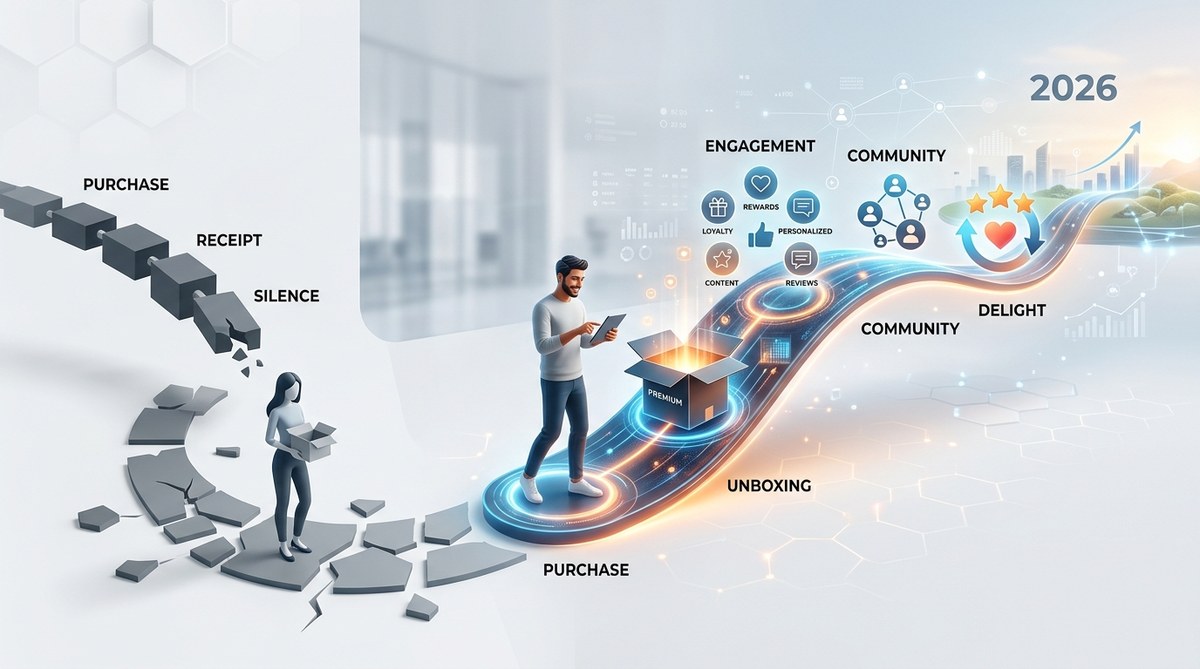
Your brand strategy gets all the attention at the top of the funnel. You spend months refining a brand voice, designing a beautiful website, and running ads that land like a handshake. But then what? The moment someone clicks “buy,” most brands go silent. That silence is expensive.
In 2026, the brands that win are the ones that treat the post-purchase phase as a core part of their strategy, not an afterthought. A strong post-purchase experience strategy 2026 can turn a one-time buyer into a repeat customer who tells everyone they know. Let’s talk about how to build that.
Most brands lose customers after the sale because they treat the post-purchase phase as a logistics task instead of a brand-building moment. A structured post-purchase experience strategy for 2026 focuses on proactive communication, personalized content, and service recovery to turn buyers into loyal advocates. This guide gives you a practical plan to build that system and justify the budget for it.
Why the Post-Purchase Phase Is Your Biggest Missed Opportunity
Think about the last thing you bought online. After you paid, what happened? Maybe you got a tracking number. Maybe a “thank you” email. Then nothing until the box showed up. That gap between payment and delivery is where trust is built or broken.
Research shows that acquiring a new customer can cost five to seven times more than keeping an existing one. Yet most brand budgets are flipped. They spend heavily on acquisition and almost nothing on retention. That math does not work anymore.
A solid post-purchase experience strategy 2026 changes that. It turns the time after checkout into a revenue driver. It makes customers feel seen, valued, and eager to come back. And it gives you a competitive edge that most of your competitors are ignoring.
The Three Pillars of a Post-Purchase Experience Strategy
Building a post-purchase system does not require a massive tech stack or a huge team. It requires a clear strategy built on three pillars.
1. Proactive Communication
Customers hate waiting in the dark. They want to know where their order is, when it will arrive, and what to do if something goes wrong. Proactive communication means sending updates before the customer asks for them.
- Send an order confirmation immediately.
- Send a shipping notification with a tracking link.
- Send a delivery day reminder.
- Send a “your package has arrived” message with a note on how to get started.
Each touchpoint is a chance to reinforce your brand. Use your brand voice. Add a helpful tip. Include a link to a setup video or a care guide.
2. Personalized Content
A generic “thank you” email is forgettable. A personalized message that remembers what the customer bought and offers relevant next steps is memorable.
For example, if someone buys a coffee maker, send them a guide on how to brew the perfect cup. If they buy a pair of running shoes, send them a playlist for their first run. This kind of content shows you understand them.
3. Service Recovery
Things go wrong. Packages get lost. Products arrive damaged. Sizes are wrong. How you handle those moments defines your brand.
A good post-purchase strategy includes a clear, easy returns process and a customer service team that is empowered to fix problems fast. A problem handled well can actually increase loyalty.
“A customer whose issue is resolved in under five minutes is more likely to buy again than a customer who never had a problem at all.”
Customer service study, 2025
How to Build Your Post-Purchase Experience Strategy: A Step-by-Step Process
Use this numbered process to build your own post-purchase experience strategy 2026.
-
Map the customer journey after checkout. Write down every touchpoint from the moment they click “buy” to 60 days after delivery. Include emails, SMS, package inserts, and support interactions.
-
Identify the gaps. Where are customers left waiting? Where do they get confused? Where do they drop off? Look at your support tickets and return data for clues.
-
Set your goals. What do you want to achieve? Higher repeat purchase rate? Lower return rate? More reviews? Pick one or two primary metrics.
-
Design the experience. For each touchpoint, decide what message to send, what channel to use, and what value to provide. Keep your brand voice consistent.
-
Choose your tools. You do not need a huge platform. Start with email automation and a good returns portal. Add SMS and personalization as you grow.
-
Test and iterate. Run A/B tests on your email subject lines, timing, and content. Track your metrics. Adjust based on what works.
-
Scale what works. Once you have a winning formula, expand it to more customer segments and more touchpoints.
Techniques vs. Common Mistakes: A Handy Reference
| Technique | Mistake |
|---|---|
| Send a personalized thank you video from the founder | Send a generic “order confirmed” email with no personality |
| Offer a prepaid return label with clear instructions | Force customers to call customer service for a return code |
| Send a how-to guide based on the product purchased | Send a generic newsletter with unrelated offers |
| Ask for a review two weeks after delivery | Ask for a review the day after purchase |
| Provide real-time package tracking via SMS | Only send a tracking number once, buried in an email |
| Give a small surprise gift in the package | Add a coupon that expires in 48 hours, creating pressure |
How to Justify the Budget for Your Post-Purchase Strategy
If you are a brand strategist or ecommerce marketing manager, you already know the value. But your boss or finance team might need convincing. Here is how to make the case.
Start with your current numbers. Calculate your customer acquisition cost (CAC) and your average order value (AOV). Then estimate how much revenue you could gain by increasing repeat purchase rate by just 10 percent.
For example, if you have 10,000 customers per year with an AOV of $100, and only 20 percent buy again, that is $200,000 in repeat revenue. If you increase repeat rate to 30 percent, that jumps to $300,000. That is $100,000 in additional revenue from the same customers.
Now show the cost. A basic post-purchase automation platform costs a few hundred dollars per month. A small team can manage it. The ROI is clear.
You can also look at your support costs. A good post-purchase strategy reduces support tickets by answering questions before they are asked. That saves money too.
What Success Looks Like: A Real-World Case Study
Let us look at a fictional but realistic example. A direct-to-consumer skincare brand called Glow & Co. was spending $50 per new customer on ads. Their repeat purchase rate was 15 percent. They decided to overhaul their post-purchase experience.
They started sending a personalized skincare routine guide after each purchase. They added a “your order is out for delivery” SMS with a link to a video on how to use the products. They made returns free and easy.
Within six months, their repeat purchase rate climbed to 28 percent. Their customer support tickets dropped by 40 percent. Their net promoter score went up by 15 points. And their cost per repeat purchase fell by half.
That is the power of a focused post-purchase experience strategy 2026.
Connecting Post-Purchase to Your Broader Brand Strategy
Your post-purchase experience is not separate from your brand strategy. It is the most personal part of it. Every email, every package, every interaction after the sale is a chance to live your brand values.
If your brand promises quality, your post-purchase experience must deliver quality too. If your brand is playful, your post-purchase emails should be playful. If your brand is sustainable, your packaging and return process should reflect that.
For more on building a brand that lasts, check out our guide on building a resilient brand strategy in a rapidly changing digital landscape. And if you want to understand how consumer insights shape brand positioning, read our piece on harnessing consumer insights to transform your brand positioning.
Your Next Steps for a Post-Purchase Experience Strategy 2026
You do not need to do everything at once. Start small. Pick one touchpoint and make it better this week. Maybe it is the order confirmation email. Maybe it is the returns page. Maybe it is adding a handwritten note to the package.
Track the results. Learn from them. Then improve the next touchpoint.
The brands that win in 2026 will be the ones that care about the customer after the sale, not just before it. Your post-purchase experience is your chance to turn a transaction into a relationship. That is a strategy worth investing in.
So take the first step today. Map your current post-purchase journey. Find one gap. Fix it. Then do it again. Your customers will notice, and your bottom line will thank you.