 By dylan
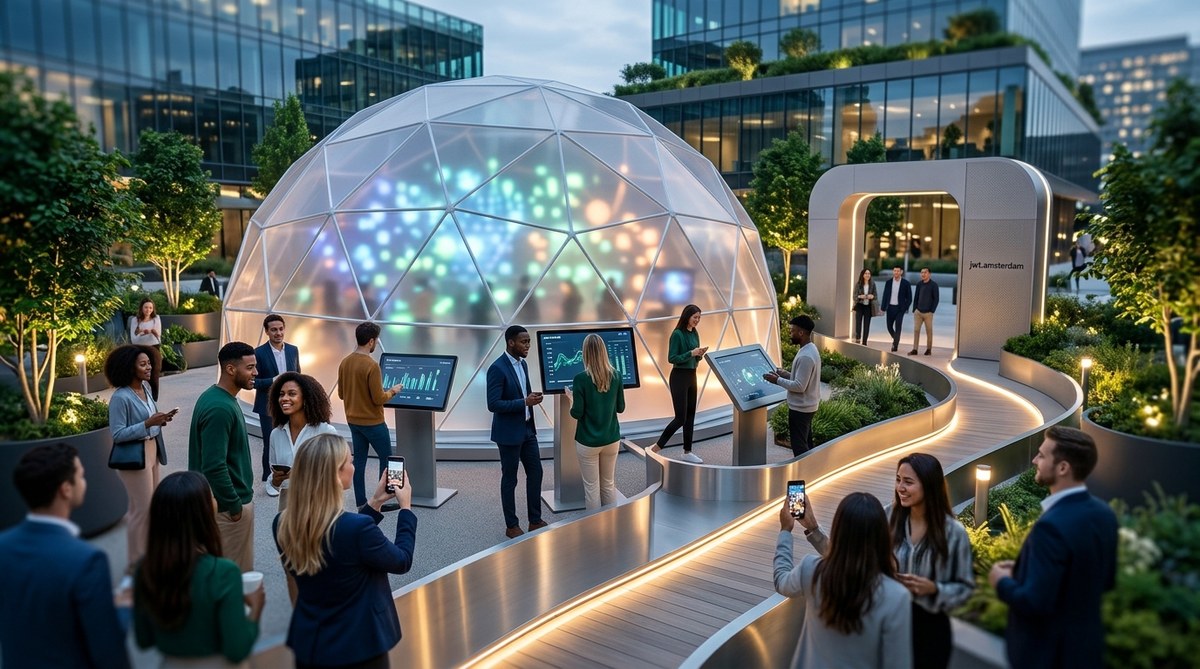
In the past twelve months, something shifted. Your target audience started skipping past polished video ads. They stopped clicking display banners. They began ignoring the perfectly timed email sequences you spent months optimizing. But they showed up. They lined up for a pop-up activation in Brooklyn. They posted selfies from a brand installation in Austin. They told their friends about a tasting event in Chicago. That gap between what you are spending on digital performance and what you are actually getting back is not a budget problem. It is a strategy problem. And the fix is a deliberate, well-planned shift toward experiences that people want to be part of.
Experiential marketing is no longer a niche add-on for your annual plan. In 2026, it is a core growth driver that builds emotional connection, generates high-quality first-party data, and creates content your audience will share. This guide walks you through the strategic pivot, the planning process, and the metrics that prove ROI to your leadership team.
Why the digital-only playbook is losing steam
You have probably felt it. The cost per click keeps climbing. Platform algorithms change overnight and tank your organic reach. Consumers are more skeptical of ads than ever. According to a 2025 study from Event Marketer, 91% of consumers feel more positive about brands after attending a live event or experience. Compare that to the average click-through rate on a display ad, which hovers around 0.46%.
The math is simple. People trust their own senses more than they trust a pixel. When they can touch a product, smell it, hear it, or try it, they form a memory that no retargeting campaign can replicate. That memory directly influences their next purchase decision.
As you plan your budget for the coming year, ask yourself this: Are you spending 80% of your money on channels that deliver 20% of your emotional impact? If the answer is yes, it is time to consider a strategic pivot.
What experiential marketing actually means in 2026
Let us clear up a common misunderstanding. Experiential marketing is not just throwing a party or renting a booth at a trade show. It is a structured, measurable strategy that puts your brand directly into the hands and lives of your audience.
A strong experiential marketing strategy in 2026 includes:
- Pop-up retail activations that test new markets
- Branded workshops and masterclasses that teach a skill
- Immersive installations designed for social sharing
- Sampling tours tied to specific local events or holidays
- Virtual or hybrid events that extend reach beyond the physical location
- Community meetups that turn loyal customers into brand advocates
Each of these tactics serves a specific goal. Some are designed for awareness. Others focus on conversion or loyalty. The best part? Every single one of them generates content you can repurpose across your owned channels for months.
The three-part framework for your experiential pivot
Shifting your strategy does not mean abandoning everything you have built. It means rebalancing. Here is a simple framework to guide your planning for the next 12 months.
-
Audit your current spend and impact. Pull your last two quarters of performance data. Separate your channels by cost per acquisition and emotional resonance. Emotional resonance is harder to measure, but you can use proxies like social sentiment, share of voice, and repeat purchase rate. Identify which channels are draining budget without building connection.
-
Identify your brand’s most shareable moment. Think about your product or service. What is the one thing that makes someone smile, say “wow,” or reach for their phone to take a video? That is your experiential anchor. For a food brand, it might be the first bite. For a software company, it might be the moment a user solves a frustrating problem. Design your activation around that moment.
-
Build a measurement plan before you build the event. This is where most teams get it wrong. They plan the experience first and the metrics second. Flip it. Decide what success looks like in terms of foot traffic, media impressions, leads captured, or net promoter score. Then design the activation to hit those numbers.
“The best experiential campaigns feel like a gift, not a pitch. When you give people a genuine moment of joy, they will give you their attention, their data, and their loyalty in return.” – Sarah Jenkins, VP of Brand Experience at a major CPG company
Common pitfalls and how to avoid them
Even the best intentions can go wrong. Here is a table of the most frequent mistakes brand managers make when they pivot to experiential, along with the fix.
| Mistake | Why It Happens | The Fix |
|---|---|---|
| Choosing a venue for its looks, not its audience | The venue is cool, but the wrong crowd shows up | Map your target customer’s daily habits. Go where they already are. |
| Forgetting the digital bridge | Great event, zero online follow-up | Capture emails, phone numbers, or social follows at the door. Send a thank-you within 24 hours. |
| Measuring only attendance | The event was packed, but no one bought anything | Track leads, sales, and post-event engagement. Tie each metric back to revenue. |
| Overcomplicating the experience | Too many touchpoints confuse attendees | Pick one core interaction and make it flawless. Less is more. |
| Ignoring staff training | Contractors do not know the brand story | Invest in a short training session. Your staff are the face of the experience. |
How to build your experiential marketing strategy for 2026
You need a process that your team can follow and your leadership can approve. Here is a numbered list of steps that work for brands of any size.
-
Set one primary objective. Do not try to do everything. Choose between awareness, acquisition, or retention. Build the entire activation around that single goal.
-
Research your audience’s real-world behavior. Where do they hang out on a Saturday morning? What local festivals do they attend? What problems do they talk about with friends? Use surveys, social listening, and customer interviews to find the answer.
-
Design a “thumb-stopping” moment. This is the 5 to 10 second interaction that will make someone pull out their phone. It could be a photo backdrop, a live demonstration, or a product reveal. Make it visual and easy to share.
-
Build a digital capture system. Have a tablet or QR code ready at every touchpoint. Offer a small incentive for an email address or phone number. This is your first-party data goldmine.
-
Plan your content repurposing calendar. Before the event starts, assign someone to capture video, photos, and quotes. Plan three posts for Instagram, two for LinkedIn, and one for your email newsletter. Stagger them over two weeks.
-
Create a post-event nurture sequence. Everyone who attended gets a personalized email within 48 hours. Include a highlight video, a discount code, and a link to share feedback.
-
Report on the full funnel. Do not just report attendance. Show how many attendees became leads, how many leads converted, and what the average order value was compared to your other channels.
Real-world examples that worked in 2025 and early 2026
Let us look at two brands that executed this strategy well.
A mid-size skincare brand wanted to launch a new moisturizer. Instead of a traditional digital campaign, they set up a 3-day pop-up in three cities: Los Angeles, Chicago, and New York. They offered free 15-minute skin consultations. Each attendee received a sample of the new product. The brand captured 4,500 email addresses. They also generated 1,200 user-generated social posts. The cost per lead was 60% lower than their Facebook Ads average.
A B2B software company targeting marketing managers hosted a series of small, invitation-only dinner events in five major US cities. Each dinner included a live demo of their new analytics tool. The conversation was casual. No hard sales pitch. Within 90 days, 40% of dinner attendees had signed up for a paid trial. The average deal size was 2.5 times larger than their typical inbound lead.
Both of these brands understood one thing. They stopped trying to interrupt people and started inviting them in.
Metrics that prove experiential ROI to your board
You cannot walk into a budget meeting with only photos of smiling faces. You need numbers. Here are the metrics that matter most when you are building your experiential marketing strategy for 2026.
- Cost per engagement. Total event cost divided by the number of meaningful interactions (conversations, trials, demos). Compare this to your cost per click or cost per view.
- First-party data capture rate. Percentage of attendees who gave you their contact information. Aim for 60% or higher.
- Social amplification. Total shares, mentions, and user-generated content divided by total attendees. A ratio above 2.0 means your event was highly shareable.
- Post-event conversion rate. How many attendees took a desired action within 30 days? This could be a purchase, a demo request, or a newsletter signup.
- Net promoter score. Ask attendees how likely they are to recommend your brand after the experience. A score above 50 is excellent.
How to integrate experiential with your existing digital strategy
This is the part that makes your CFO comfortable. Experiential marketing does not replace your digital channels. It supercharges them. Every live event feeds content into your social media, your email list, and your retargeting pools.
Think of it this way. Your digital strategy handles scale and efficiency. Your experiential strategy handles depth and emotion. Together, they create a full funnel that moves people from awareness to advocacy.
For example, you can use a data-driven creativity approach to design the pre-event teaser campaign. Then, after the event, you can use the insights you gathered to refine your brand positioning for the next quarter.
Your 30-day action plan to start the pivot
You do not need to wait for the next fiscal year. Here is what you can do in the next 30 days to lay the groundwork.
- Week 1: Audit your current marketing mix. Identify the channels with the lowest emotional return.
- Week 2: Interview five of your most loyal customers. Ask them what a perfect brand experience would look like for them.
- Week 3: Brainstorm three low-cost experiential concepts. Think small. A single pop-up. A workshop. A meetup.
- Week 4: Present one concept to your leadership team with a clear measurement plan. Use the metrics from this guide to back up your ask.
Why this pivot matters more in 2026 than ever before
Consumer attention is not just scarce. It is fractured across more platforms than ever. The algorithms that used to deliver your content for free now demand payment. Your competitors are all chasing the same keywords. The only way to break through is to create something that people want to experience, not just consume.
Experiential marketing gives you a moat that your competitors cannot easily cross. They can copy your ad copy. They can bid on your keywords. But they cannot replicate the feeling someone gets when they hold your product, talk to your team, and share a genuine moment with your brand.
That feeling builds loyalty. Loyalty drives repeat purchases. Repeat purchases lower your customer acquisition cost. And a lower acquisition cost makes your entire marketing engine more profitable.
Building your experiential muscle for the long term
This is not a one-and-done tactic. It is a capability you need to build inside your organization. Start with one well-executed event per quarter. Document everything. Measure everything. Learn from everything.
As you grow more confident, you can layer in larger activations, hybrid events, and permanent brand spaces. The brands that treat experiential as a core pillar, not a side project, will be the ones that win in 2026 and beyond.
If you are ready to take the next step, start by looking at how community-led growth can extend the life of your event. Then, build a human-centric approach into every activation you plan.
The audience is waiting. They want to connect. They are tired of being advertised to. Give them an experience worth showing up for, and they will reward you with their attention, their trust, and their business.