 By dylan
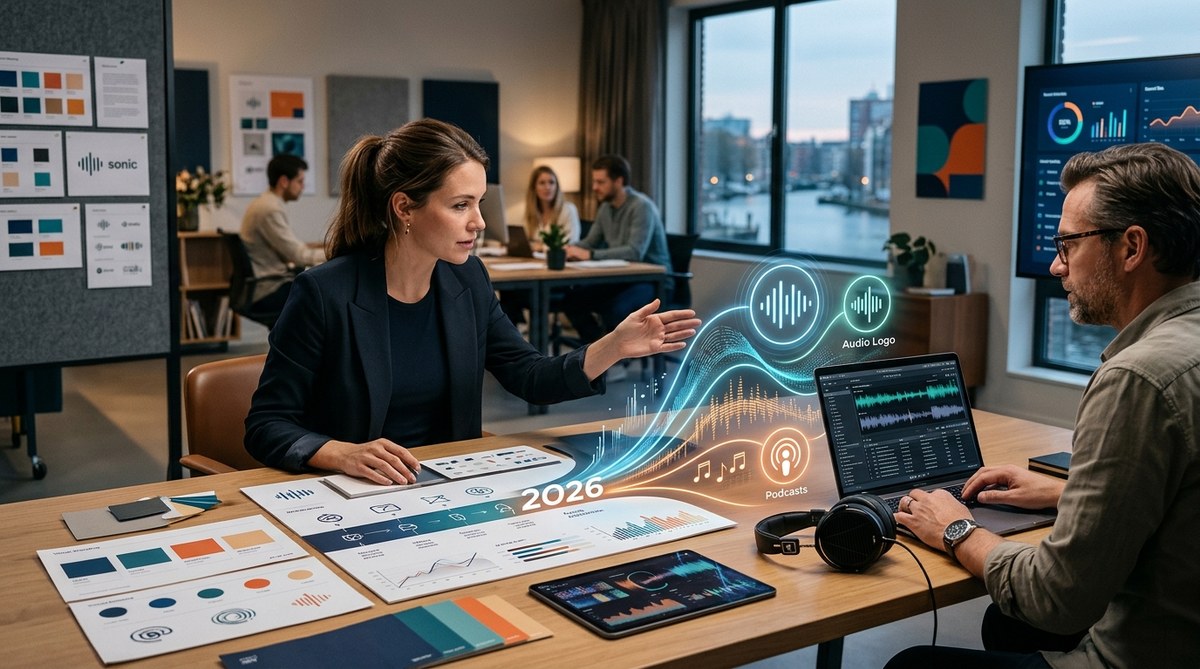
Your brand strategy for 2026 is probably missing one of the most powerful tools you already have: sound. Visual identity, tone of voice, and purpose are all critical. But audio is the sense that bypasses logic and hits emotion first. Think about the Intel chime, the Netflix “ta-dum,” or the roar of a Harley engine. These aren’t just sounds. They are anchors for a feeling. In a world where consumers are drowning in visual noise, audio branding gives your brand a direct line to memory and emotion. If you haven’t planned a strategic pivot to audio branding yet, you are leaving attention on the table.
Audio branding is no longer a nice-to-have. In 2026, it is a strategic necessity for brands that want to cut through clutter, build emotional loyalty, and own a sensory signature. This guide covers why sound matters more than ever, how to build a sonic identity, and the common pitfalls to avoid. You will leave with a clear plan for your audio pivot.
Why Audio Branding Matters More in 2026
The average American adult now spends over four hours a day listening to audio content. Podcasts, streaming music, smart speakers, and voice search are no longer niche. They are the default. When your brand appears only visually, you miss every moment someone is listening instead of scrolling.
But the real reason is deeper. Sound triggers emotion faster than any other sense. A major study from the University of Southern California found that audio can evoke a measurable emotional response in under one second. That is faster than a logo or a color. Your brand’s audio signature can build trust, recall, and preference before a single word is read.
Audio branding strategy in 2026 is not just about a jingle. It is about creating a consistent sonic ecosystem across every touchpoint: podcasts, social video, in-store music, hold music, product sounds, and voice assistant interactions. When done right, it makes your brand feel present even when you are not speaking.
The Three Pillars of a Successful Audio Branding Strategy
To build an audio identity that works, you need more than a catchy tune. You need a system. Here are the three pillars that every effective audio branding strategy rests on.
1. A Sonic Logo That Signals Your Brand
This is the short, distinctive sound that plays when your brand appears. Think of it as your audio logo. It should be unique enough to be recognized in under two seconds, and flexible enough to work across contexts. Mastercard, for example, created a sonic logo that adapts to different genres and moods while staying unmistakably theirs.
2. A Brand Voice for Voice Assistants and AI
By 2026, over half of all searches will be voice-based. Your brand needs a defined voice for smart speakers, chatbots, and in-car assistants. This voice must match your brand personality. A financial services brand should sound trustworthy and calm. A fitness brand should sound energetic and direct. Consistency here builds trust.
3. A Sonic Ecosystem for Every Channel
Your audio identity should extend into podcasts, social media videos, TV ads, and even the sound your app makes when a user completes an action. Each of these moments is an opportunity to reinforce your brand. If your audio changes from channel to channel, you lose the cumulative effect of recognition.
A Practical Process for Building Your Audio Brand
Building an audio branding strategy does not require a massive budget. It requires a clear process. Here is a step-by-step approach that works for mid-to-large companies.
- Audit your current audio touchpoints. List every place your brand makes a sound today. This includes hold music, video intros, event soundtracks, and product sounds. Note any inconsistencies.
- Define your brand’s sonic personality. Use the same words you use for your visual identity. Is your brand playful or serious? Modern or classic? Write a short brief.
- Create a sonic logo. Work with a composer or audio branding agency to create a short, memorable sound. Test it for recall with a small audience.
- Document your audio guidelines. Write down how your sonic logo should be used, what instruments or tones are off-brand, and how your brand voice should sound in voice interactions.
- Roll out across your ecosystem. Start with the highest-traffic touchpoints. Update your podcast intro, your YouTube channel, and your in-store audio. Then expand to smaller channels.
Common Mistakes in Audio Branding (And How to Avoid Them)
Even well-intentioned brands make errors when they first pivot to audio. Here is a table of the most common mistakes and how to fix them.
| Mistake | Why It Hurts | How to Fix |
|---|---|---|
| Using generic stock music | No brand recall, sounds like everyone else | Invest in a custom sonic logo |
| Inconsistent volume across channels | Jarring experience, lowers trust | Create a mastering guide for audio levels |
| Ignoring voice search | Missed opportunity for discovery | Define a brand voice for Alexa, Siri, and Google Assistant |
| Overcomplicating the sound | Hard to remember, easy to skip | Keep your sonic logo under three seconds |
| No testing with real audiences | May not evoke the intended emotion | Conduct A/B testing on audio variants |
What the Data Says About Audio Branding Effectiveness
Numbers back up the intuition. A 2025 study by Nielsen found that brands with a consistent audio identity saw a 23% higher brand recall in audio-heavy environments like podcasts and streaming radio. Another report from Spotify showed that listeners who heard a brand’s audio logo before an ad were 14% more likely to consider that brand.
These aren’t small gains. In a market where every percentage point of recall matters, audio branding delivers measurable lift. It also works across demographics. Gen Z and Boomers both respond to audio cues, though the genres differ. The common thread is consistency and emotional fit.
“Audio branding is the most underutilized tool in the modern marketer’s kit. It costs less than a video campaign and often delivers a higher return on emotional engagement.” — Dr. Sarah Kellerman, audio branding researcher
How to Integrate Audio Into Your Existing Brand Strategy
You don’t need to scrap your current plan. Audio branding works best when layered onto a strong visual and verbal identity. Here is how to align it with your existing strategy.
- Link your sonic logo to your visual logo. Use them together in video intros and TV spots. Over time, the sound alone will trigger the image.
- Match your audio to your brand voice guidelines. If your brand voice is warm and conversational, your audio should use acoustic instruments and a moderate tempo. If your voice is bold and edgy, use electronic sounds and faster rhythms.
- Use audio in your physical spaces. Retail stores, trade show booths, and even office lobbies can all reinforce your brand through sound. This is especially important for building a resilient brand strategy in a rapidly changing digital landscape.
The Tools and Roles You Need to Get Started
You don’t need a full orchestra. Here is what you need to execute an audio branding strategy in 2026.
- A brand strategist or marketing director to define the sonic personality and brief.
- A composer or audio branding agency to create the sonic logo and guidelines.
- A sound engineer to master audio assets for different platforms.
- A project manager to coordinate the rollout across channels.
If your team is small, start with a freelance composer and a clear brief. Many audio branding agencies now offer modular packages that start with a sonic logo and expand from there.
How to Measure the Impact of Your Audio Brand
Measurement is possible without complex tools. Track these metrics to see if your audio branding strategy is working.
- Brand recall in audio environments. Run a simple survey after a podcast ad or streaming campaign.
- Completion rates for audio content. If your podcast or video intros have high drop-off, your audio may not be engaging.
- Sentiment in voice interactions. Monitor customer feedback on your voice assistant or hold music.
- Direct attribution. Use unique promo codes or URLs in audio ads to track conversions.
For more on measuring brand health, see our guide on 7 brand strategy metrics that matter most in 2026.
Putting Your Audio Branding Strategy Into Action
The best strategy is one that gets used. Here is a simple action plan for the next 90 days.
- Week 1-2: Audit your current audio touchpoints and write your sonic personality brief.
- Week 3-6: Work with a composer to create your sonic logo and guidelines.
- Week 7-8: Test the sonic logo with a small audience and refine.
- Week 9-12: Roll out the audio identity across your top three channels. Monitor feedback and adjust.
Audio branding does not have to be perfect on day one. Start small, learn fast, and expand. The brands that win in 2026 will be the ones that show up consistently across every sense. Sound is your next frontier.
A Final Thought on Standing Out Through Sound
Your brand already has a visual identity and a tone of voice. Adding a sonic identity completes the picture. It makes your brand feel more real, more present, and more human. In a world where attention is scarce, audio gives you a way to connect without competing for screen space. If you want to differentiate your brand in a crowded market, start listening to what your brand sounds like. Then change it. The results will speak for themselves.